Lower cut-in speed
Modern rotor geometries and low-friction generators begin producing in a light breeze rather than needing a sustained gale, which is what made older machines useless in urban air.
New technology · now quotable
A new class of compact turbines generates through the night and the monsoon — the two windows where a solar-only building falls back on the grid. SunX assesses, installs and maintains them for homes, campuses and industry.
Why add wind
A rooftop PV array produces on a bell curve peaking at midday and reaching zero by evening. Most homes and many industries consume the opposite way — heaviest in the evening, through the night, and all through a cloudy monsoon week.
That mismatch is why a solar-only building still imports a large share of its units, and why storage alone gets expensive: batteries have to be sized for every hour the sun is absent. A small wind turbine attacks the problem from the other side. Wind in the Deccan typically strengthens in the late afternoon and evening and holds up through the south-west monsoon, exactly when irradiation collapses.
Put PV and a turbine on the same hybrid inverter and the combined generation curve flattens out. The battery you need gets smaller, the share of self-consumed units goes up, and the grid becomes a back-up rather than a supplier.
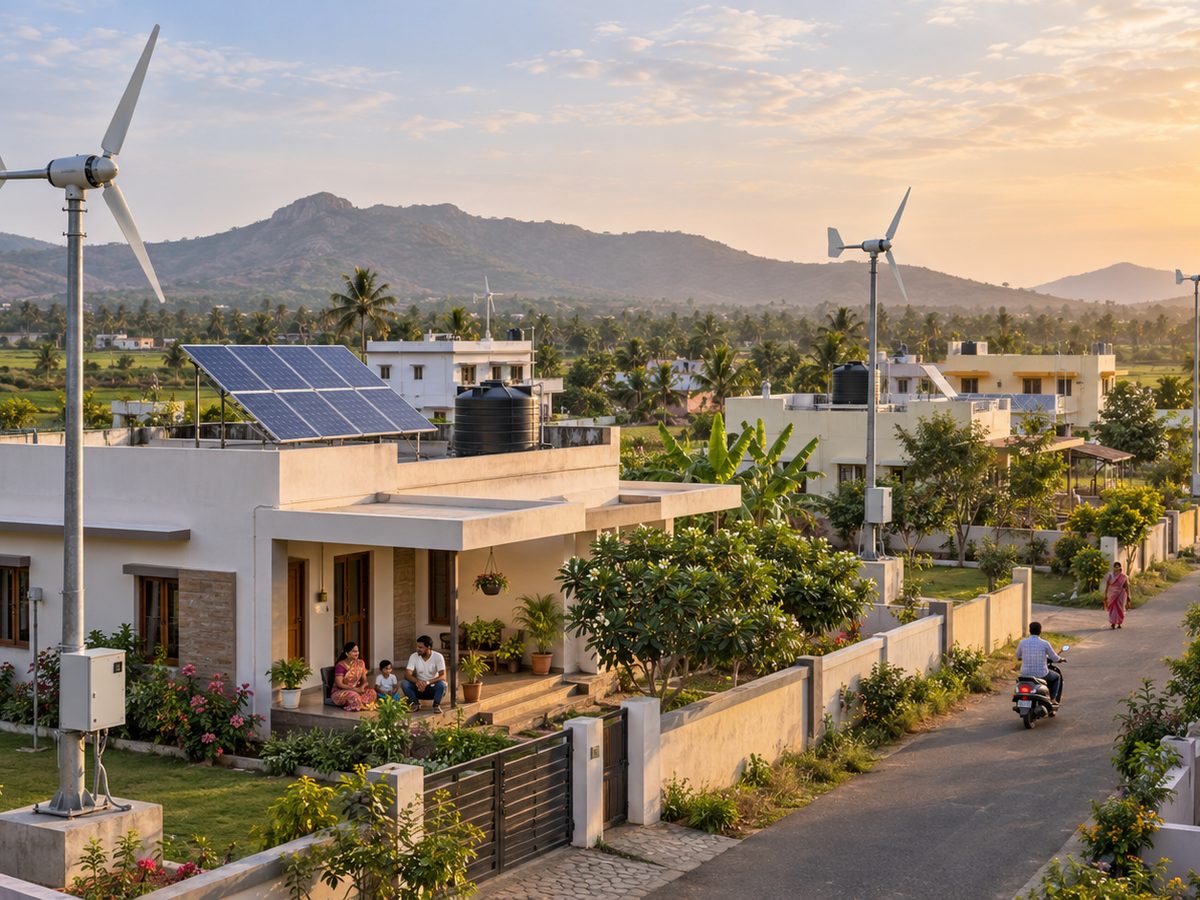
Wind speeds across the Telangana plateau commonly rise after 3 pm and hold into the night.
June to September costs a PV array a large share of its yield. It is a strong wind season.
What changed
If you looked at rooftop wind a decade ago and walked away, you were probably right to. Four things have changed since.
Modern rotor geometries and low-friction generators begin producing in a light breeze rather than needing a sustained gale, which is what made older machines useless in urban air.
Vertical-axis designs and damped mounting brought sound and structural vibration down to levels that are acceptable on an occupied building — historically the deal-breaker.
One inverter now manages PV, wind, battery and grid together with proper MPPT on each source. Earlier you needed parallel systems that fought each other.
Volume manufacturing has brought small-turbine pricing into a range where, on a genuinely windy site, the units it produces compete with what the DISCOM charges.
What we install
The right machine depends on how clean your airflow is, how much height you can get and what the structure can carry.
Compact VAWTs for terraces and shed roofs in built-up areas. They accept wind from any direction and cope far better with the swirling, gusty air you get between buildings.
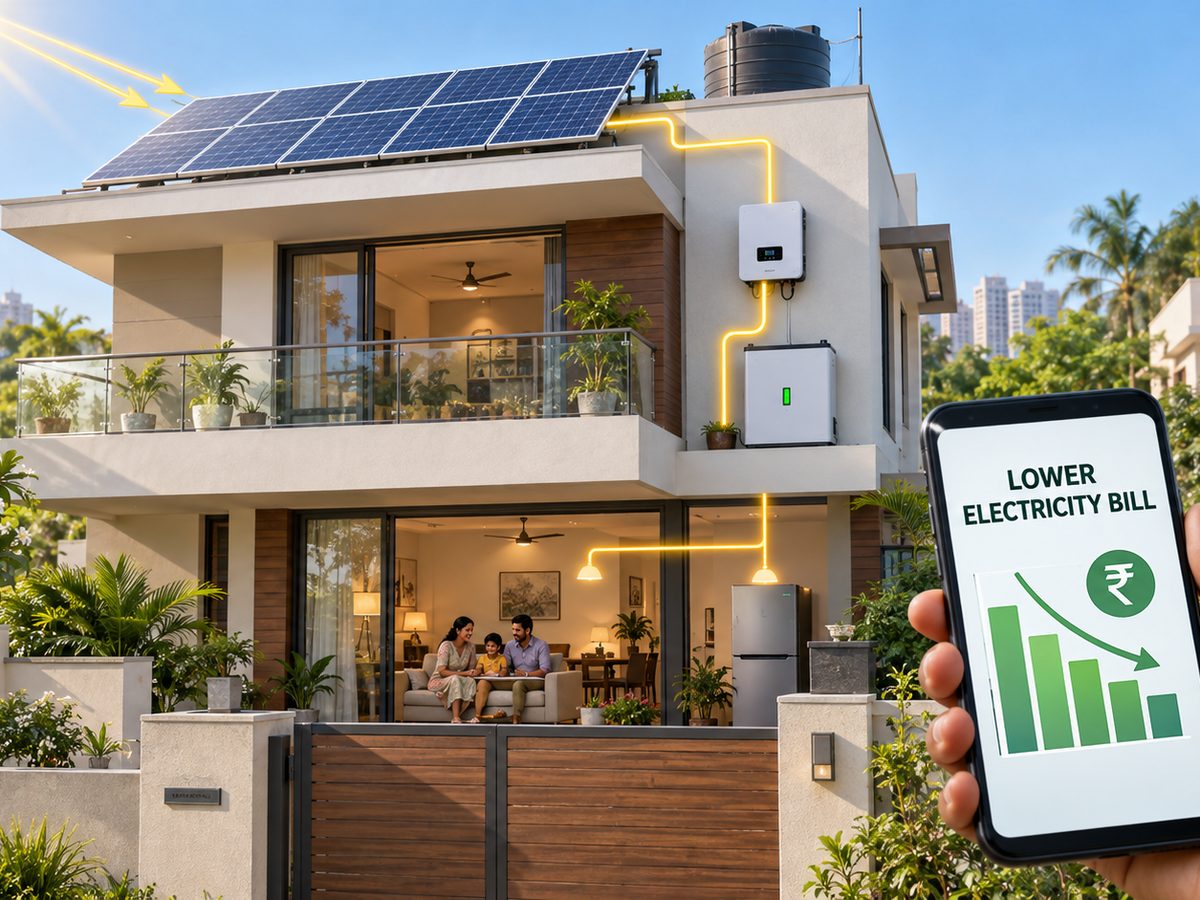
Our most recommended configuration. PV carries the day, the turbine carries the evening and the monsoon, and an LFP battery bridges what neither covers. One inverter, one app, one contract.

Where you have open land and can get real height, a conventional three-blade machine on a guyed or free-standing mast produces significantly more per kW than any rooftop unit.
How we qualify a site
Solar can be estimated from a satellite image and a bill. Wind cannot. This is the sequence we follow before we will put a number on paper.
We start from published wind-atlas data for your location and elevation, then adjust for terrain, surrounding building height and the exposure of your specific roof or plot.
Where the desk study is promising but not conclusive, we install an anemometer at the proposed hub height and log real wind speed and direction before committing to a machine.
Dead load, thrust load and dynamic behaviour assessed against your slab, parapet or purlin structure — with a mast and foundation design where the roof is not the right host.
An annual energy estimate for the specific turbine, with the payback shown against wind alone and against a hybrid with PV. If it does not clear, we say so and quote solar only.
Solar vs wind vs hybrid
A plain comparison, so you can see why we recommend what we recommend.
| Rooftop solar | Small wind | Wind-solar hybrid + storage | |
|---|---|---|---|
| Generates | Daylight hours, peaking midday | Whenever wind blows — often evening and night | Around the clock, with storage covering the gaps |
| Best season | October to May | May to September (monsoon and pre-monsoon) | All year, by design |
| Site sensitivity | Low — needs a shade-free roof | High — needs clean, exposed airflow | Moderate — PV carries sites where wind is marginal |
| Space needed | About 80 sq ft per kW | A mast base or a few square metres | Roof for PV, plus a turbine position |
| Maintenance | Cleaning and annual electrical checks | Cleaning, plus periodic bearing and fastener inspection | Both, on one schedule |
| Central subsidy | Yes, for eligible homes under PM Surya Ghar | Not covered by the residential rooftop scheme | On the PV portion only |
| Typical payback | Shortest of the three | Longer, and highly site-dependent | Between the two, with the best energy independence |
| We recommend it when | You have a good roof and a daytime load — almost always start here | You have genuinely windy, exposed land and evening load | Outages are costly, or you want to run largely off your own generation |
Subsidy and scheme eligibility change from time to time. We confirm what applies to your project at the time of proposal.
Wind FAQs
Find out if your site qualifies
Send us your location and a photograph of the roof or plot. We will come back with a first-pass view on whether a turbine is worth pursuing, and what a hybrid would look like alongside solar.